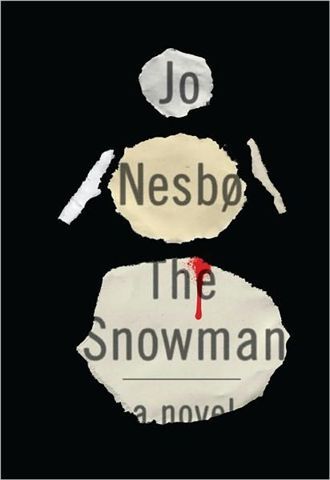
I often use my mom's shelves as a library and picked up a book over the summer to read before Thanksgiving (the Janet Robbins library has longer borrowing periods than your neighborhood library). Her book club read Still Alice by Lisa Genova last year, a story of a Harvard psychology professor in her early 50s who is diagnosed with early onset Alzheimer's. I almost missed my return date, though, because I couldn't bring myself to read it, knowing that it would be a heavy and emotional read.
I didn't find the book especially well written, but I did find it to be the kind of book that gave me insight into a disease that I would never get reading an article about it. The story is told from Alice's point of view and her frustrations become my own.
I've been thinking a lot lately about identity--and how we define ourselves and how that changes over time--but mostly in the context of the identities that we can choose for ourselves. New ways of thinking we embrace, career moves, family life, cities we attach ourselves to. Of course, some of the new identities are thrust upon us from life experiences we didn't plan or ask for, but over time learn to tuck into how we see ourselves and relate to the world around us.
The layer this book added to my thought life was when all the ways that Alice had defined herself began to fade--ever more intensely--as her disease progressed. She pondered the question herself in a "last lecture" sort of scene towards the end of the book:
"I often fear tomorrow. What if I wake up and don't know who my husband it? What if I don't know where I am or recognize myself in the mirrow? When will I no longer be me? Is the part of my brain that's responsible for my unique 'me-ness' vulnerable to this disease? Or is my identity something that transcends neurons, proteins, and defective molecules of DNA? Is my soul and spirit immune to the ravages of Alzheimer's? I believe it is."
I guess that reading this book reaffirmed my belief that identity comes from something deeper than a profession or a pastime. I had a fleeting second of the fear of sounding trite writing that. But it is also beautifully simple, so.
Sunday, December 9, 2012
Saturday, December 1, 2012
portrait of a reader.
Winner of the National Book Award was an impulse purchase at a local bookstore a few weeks ago. I have books in my apartment I haven't read and yet, with Thanksgiving-weekend-layover travel in my future, I decided that I needed something new and entertaining. This was on the shelf of books recommended by book store employees and described as clever and hilarious. So.
It takes place in Rhode Island, on a single day where the state is bracing itself for a hurricane and local librarian Dorcas Mather, who has by choice lived a life of the mind, has gone in to work to prepare the building and to batten down the hatches from there. Abigail, her spiritual opposite-best friend-twin sister, has lived a passionate life of the flesh in every way imaginable and has recently co-written a biography about the murder of her husband--which she committed. Each chapter is structured around Dorcas hesitantly reading an excerpt of Abigail's book (actually written by their friend Hilda, whose style reminds me of Rita Skeeter, for any Harry Potter fans out there, which in turn critiques the publishing industry a bit) and then telling her version of what happened. I was kept laughing out loud throughout my LaGuardia and Reagan National Airport adventures. It did get me thinking about a few things, though.
The story's structure was about Abigail and her escapades, but the book was truly about Dorcas--as a person and as a reader. Dorcas' story asks the reader of the book if it is enough to have a life of the mind, as she honestly paints her own portrait of the Mather family's life alongside Hilda's version. There are a few moments in the story that Dorcas herself wonders if her life choices have been enough and it is fascinating to watch her wade through her reflections, especially as a voracious reader and sometimes-homebody.
"C.S. Lewis assured me I wasn't neurotic. It was possible to lives an imagined life, and to live it fully. To dwell within one's own mind and, through books, the mind of others."
"I escape, when I feel the need, into what all you bullies insist is reality. I study birds, library patrons, local politicians. Sometimes I garden. Sometimes I watch the Sox. Sometimes I drink. I keep a neat house and I pay my taxes, all in the real world. But I don't live there."
"I am simply an omnivorous reader, and like all good omnivores I take my pleasures where I can find them. In my real life, my inner life, I am as great a sensualist as my sister."
***
I am getting ready to make my 6th Annual Year in Review, a list of my top ten books of the year which I compile while sitting at my parents' house each Christmas break, rereading each blog post I wrote during that calendar year. It never fails to strike me that the moments I choose to write about from each book paint a picture of my own inner life throughout the year. In Winner of the National Book Award, Dorcas kept secret records as a librarian, written in code, of the books her regulars checked out. She didn't feel guilty about it because she knew her motives were pure--and "the privacy of my patrons' reading history is sacred." But she realized that her index cards were "concise historical records of a perculiar sort, outlining the spiritual and intellectual course of a citizen's adult life."
So, my challenge to you is to think about the story that your year of reading tells. What kinds of stories were you drawn to? What kinds of things were your eyes apt to notice this year--that perhaps at another time you might have passed right by? I would love to know your best reading experiences of 2012--I am always looking for good recommendations.
Saturday, November 3, 2012
How reading short stories is reminding me to live more reflectively and intentionally.
I recently read a novel that could be described as a collection of somewhat interwoven short stories called Blueprints for Building Better Girls by Elissa Schappell. I was drawn to this book because it seeks to explore the moment's that shape women's identity as women. In hindsight, I wish I had read it slowly, as there wasn't an overall character arc for each character, but a few snapshots of their lives.
This summer I read Everything Beautiful Began After by Simon Van Booy and fell in love with his rich, poetic style of prose. While on a walk through the West Village I found a collection of his short stories called The Secret Lives of People in Love and began making my way through them. What I've learned, though, is that for me, short stories for me are best read slowly and sporadically. If I read them as a novel, I don't take the time to stop and think about what the author is trying to say in each one or mull over the small details that speak into human existence. One thing I've been thinking about recently is that I am more grounded as a person when I'm letting my reading wash over my mind and impact the way I'm looking at the world. I read through the first 13 of Van Booy's 19 stories so quickly that my brain didn't have time to consider the weight of lines like: "Without memory, he thought, man would be invincible." One of the reason's I bought Schappell's book was because I wanted to think about how the female identity is formed--especially as I am teaching girls at such a critical developmental stage and stocking my library with books that they will be reading and thinking about.
Monday, October 8, 2012
The Great Gatsby and how the city seen from the Queensboro Bridge changed everything
Every year I have students join a book club with me (I've written about World War Two and Harry Potter) and this year I added The Great Gatsby to the list of choices for students who are ready to jump into some more classic, adult literature. I studied The Great Gatsby in high school, college and graduate school, but those lenses into the story don't seem to quite fit for 8th grade. Luckily I still have time to think about that, but I also got stuck figuring out how to write about it here: this is not a book review or a literary essay blog, so I went back to my roots and thought about how the story speaks into life at this moment, and at this moment I am thinking about the city. My city. New York.
Most New Yorkers with a literary slant in their lives know all the classic lines about where we live, and Fitzgerald's description is one of the best: "The city seen from the Queensboro Bridge is always the city seen for the first time, in its first wild promise of all the mystery and all the beauty in the world," (73).
This is the New York I like to think about the most: the one that still feels magical 9 years later, the one that offers up perfect autumn dinners eaten at the counter and walks into bookstores on the corner and cafe tables on the sidewalk and life swirling around. The one that has perfect theaters for rainy Sunday matinees that follow a long brunch at a South African restaurant.
And yet. There is also "...a valley of ashes--a fantastic farm where ashes grow like wheat into ridges and hills and grotesque gardens, where ashes take the forms of houses and chimneys and rising smoke and finally, with a transcendent effort, of men who move dimly and already crumbling through the powdery air," (27).
This is the New York that I also think about. I can be literal and think about the insane amount of trash that we proffer to the sidewalks or the hours lost waiting on a train that has been rerouted for the weekend. I can calculate the money I have spent in rent over the years or figure out how many pounds of groceries I have carried over x amount of miles. I weigh these things often these days. Or, more heavily, I can think about the students who walk into city schools coming from families who don't value education and don't see their own worth and a system that doesn't know how to help. I can think about the men and women who sleep on the streets and the paralyzing feeling of not being able to help as I walk by with my smart phone in hand.
I dream a lot about a little house with a fire place on a little piece of land, where life could be quiet and where I could see the sunset every day. And that may happen still. But. Living in a place filled with both beauty and ashes has changed the way I read the world around me--and I don't think I could ever be the same, or shake the feeling that no matter how cozy my life is, whether that is reading my book while homemade tomato sauce is simmering on my stove in my studio apartment or some future multi-room home in my future, there are ashes scattered around me--and that I should never stop looking for ways to help beauty and life to grow among and out of them.
Most New Yorkers with a literary slant in their lives know all the classic lines about where we live, and Fitzgerald's description is one of the best: "The city seen from the Queensboro Bridge is always the city seen for the first time, in its first wild promise of all the mystery and all the beauty in the world," (73).
This is the New York I like to think about the most: the one that still feels magical 9 years later, the one that offers up perfect autumn dinners eaten at the counter and walks into bookstores on the corner and cafe tables on the sidewalk and life swirling around. The one that has perfect theaters for rainy Sunday matinees that follow a long brunch at a South African restaurant.
And yet. There is also "...a valley of ashes--a fantastic farm where ashes grow like wheat into ridges and hills and grotesque gardens, where ashes take the forms of houses and chimneys and rising smoke and finally, with a transcendent effort, of men who move dimly and already crumbling through the powdery air," (27).
This is the New York that I also think about. I can be literal and think about the insane amount of trash that we proffer to the sidewalks or the hours lost waiting on a train that has been rerouted for the weekend. I can calculate the money I have spent in rent over the years or figure out how many pounds of groceries I have carried over x amount of miles. I weigh these things often these days. Or, more heavily, I can think about the students who walk into city schools coming from families who don't value education and don't see their own worth and a system that doesn't know how to help. I can think about the men and women who sleep on the streets and the paralyzing feeling of not being able to help as I walk by with my smart phone in hand.
I dream a lot about a little house with a fire place on a little piece of land, where life could be quiet and where I could see the sunset every day. And that may happen still. But. Living in a place filled with both beauty and ashes has changed the way I read the world around me--and I don't think I could ever be the same, or shake the feeling that no matter how cozy my life is, whether that is reading my book while homemade tomato sauce is simmering on my stove in my studio apartment or some future multi-room home in my future, there are ashes scattered around me--and that I should never stop looking for ways to help beauty and life to grow among and out of them.
Labels:
beauty,
books,
brokenness,
classic lit,
existential struggle,
hope,
new york,
redemption
Saturday, September 29, 2012
the art and psychology of mixed tapes and belonging.
I loved it, but didn't connect with the characters the way high school readers did because I felt like I was a life-stage ahead of them...the characters were in the act of figuring out who they were and I felt like I was already there. Of course, those are the kinds of cringe-inducing, arrogant things that 22 year olds think. Reading it now, ten years later, I found myself relating to Charlie's desire to be connected to the world around him and belong to something greater.
He collects songs and makes mixed tapes. He collects books. He collects moments with his writing. And he curates them in an attempt to make sense of existence.
"I hope it's the kind of second side that he can listen to whenever he drives alone and feel like he belongs to something whenever he's sad. I hope it can be that for him."
"I had an amazing feeling when I finally held up the tape in my hand. I just thought to myself that in the palm of my hand, there was this one tape that had all of these memories and feelings and great joy and sadness. Right there in my hand. And I thought about how many people have loved these songs. And how many people got through a lot of bad times because of those songs. And how much those songs really mean."
“And all the books you've read have been read by other people. And all the songs you've loved have been heard by other people. And that girl that's pretty to you is pretty to other people. and that if you looked at these facts when you were happy, you would feel great because you are describing 'unity.”
"And in that moment, I swear we were infinite."
I've been thinking about what my current mixed tape would be (and what would I call it, and how would I design the cover) and which books I would pull off my shelf and hand to the world in an attempt to explain who I am? What stories do I need to write down?
Because I think there is still, beyond the angst of the teenage years, the collecting and gathering of things that are beautiful and throwing them out into the world. There is still the hope that someone will catch them and understand the way life's vignettes of beauty and pain have woven together an existence. I have come to realize that my 22 year old self was the sophomoric one: the searching and desire to be known and to belong never really goes away. And though as I've gotten older and have some truths to stand on, the mysteries seem to just get wider and taller--and that is when I need my songs and books and stories for some hope along the way. And, perhaps, a fall adventure to frolic and feel infinite. At almost 32. And maybe these imagined tapes and anthologies are as much for understanding myself as asking the world to understand me.
Wednesday, September 26, 2012
Summer Reading Recap...in late September.
It seems like every year I have a month where my blog gets away from me. This year it lasted for two.
August was spent working on another writing project, spending time with some favorites in North Carolina and East Hampton. My family drove in to celebrate my grandpa's 85th birthday and we got to go to the beach and wander the city. I got to catch up with some favorite former students who just left for college, five years after I knew them as 7th and 8th graders. September was school starting celebrating the shower and nuptials of a kindred spirit for a few weekends and attempting to get some normal rhythms back in my life. Now it's almost October. Happy fall reading, y'all. May you have many afternoons spent with a hot beverage and a good book.

A few of these books I wrote about in July and I'm hoping I'll write about all of them someday. I feel like I'm not giving these books their due, but for now, here is this year's list (and here are the ones from summers past):
A Short History of Women by Kate Walbert
Stone's Fall by Iain Pears: a fascinating historical fiction mystery with the backdrop of the beginning of world financial markets
Ten Thousand Saints by Eleanor Henderson: a coming of age in the straight edge culture of the Lower East Side of New York City in the 1980s
Broken Colors by Michele Zackheim: the fictional account of an artist dealing with her brokenness across the two world wars into near-present in England, Italy, Paris and the American southwest
Broken Harbor by Tana French: her 4th book based on the Dublin Murder Squad. I loved her other books, but this one was a bit disappointing
August was spent working on another writing project, spending time with some favorites in North Carolina and East Hampton. My family drove in to celebrate my grandpa's 85th birthday and we got to go to the beach and wander the city. I got to catch up with some favorite former students who just left for college, five years after I knew them as 7th and 8th graders. September was school starting celebrating the shower and nuptials of a kindred spirit for a few weekends and attempting to get some normal rhythms back in my life. Now it's almost October. Happy fall reading, y'all. May you have many afternoons spent with a hot beverage and a good book.
A few of these books I wrote about in July and I'm hoping I'll write about all of them someday. I feel like I'm not giving these books their due, but for now, here is this year's list (and here are the ones from summers past):
A Short History of Women by Kate Walbert
Everything Beautiful Began After by Simon Van Booy
Rules of Civility by Amor Towles
Ten Thousand Saints by Eleanor Henderson: a coming of age in the straight edge culture of the Lower East Side of New York City in the 1980s
Broken Colors by Michele Zackheim: the fictional account of an artist dealing with her brokenness across the two world wars into near-present in England, Italy, Paris and the American southwest
Let's Pretend This Never Happened by Jenny Lawson
The Summer Book by Tove Jansson (as always)
Love and Death by Max Wallace and Ian Halperin: two journalists look into the death of Kurt Cobain. A great read for anyone who misses the 90s or is looking for a reason to revisit Nirvana and Hole.
Labels:
summer reading,
summer reading conclusion
Wednesday, August 1, 2012
I'll always love you, New York, and other thoughts from a family book club.
| {my mom is awesome. also, props to my dad who mixed the drinks and took the picture for us.} |
The story follows the narrator Katey through one year of her life--as a 25 year old in 1938 in New York City. It is bookended with the narrator speaking from middle age, though still in New York, thinking about how there are certain decisions in life that end up shaping the rest of one's years. We talked about this for a few minutes at our screened-in porch book club meeting, and it has been the topic that has lingered with me since and settled into the forefront of my mind last night when I was organizing a few boxes of pictures and a trunk that holds old photo albums and journals. When my mom asked the question if there were decisions we had made that had shaped the outcome of our lives, my obvious answer was moving to New York. I ran across this picture last night which was taken a month or two after I moved to Manhattan:
![]() |
| {Central Park, fall 2003} |
I made albums documenting each of the first two years, certain that I'd only be in the city for a couple years before I moved back to "regular life" in Ohio. I wanted to make sure I documented the adventure. Ha. But somewhere in that third year I decided to stay, and I think it was that decision, more than the one to move to New York for graduate school, that has had the biggest impact on my life since. That is when I began to count this city as home and stopped thinking about what I was going to do the next year. I settled in and invested in the people and places around me. I'm sure there will be decisions in the future that change my life and carry weightier meaning, but my 9 year relationship with New York has been one of the greatest influences on my life and who I've become. Looking at this picture, I remember what it was like trying to find my bearings here--simple things like traveling by foot and subway and more complex ones like trying to concoct a blend of urbanity and midwesterness. That feels so far away, especially when I realize that I'm about to enter my 10th fall in the city, my 9th year at my school and my 6th year of walking ten minutes to get there.
Labels:
books,
family,
favorite people ever,
new york,
nostalgia
Subscribe to:
Posts (Atom)