Monday, December 30, 2013

My Year as a Reader: Top Ten Books of 2013

I generally count my time in alignment school years: September is the new year and August is the month of reflection and generating new ideas for the coming year, so it's always interesting each December to examine and reflect on the calendar year.  And actually, it's probably healthier to not count my days by my profession.  This year was one of my favorites:

First and foremost, I got engaged on January 1st and our wedding in August was a celebration with family and friends I will truly never forget (especially my grandpa organizing the Yager family at the hotel bar Friday night, dancing to Gloria with my Uncle Bob at the reception, or my Brooklyn girls fulfilling their promise of charging to the dance floor as soon as the music started, hands in the air).


Personally, I have learned so much about paying attention to small moments of beauty and truth, breathing deeply, and taking the time to nurture creativity.  Professionally, this summer I had the opportunity to be inspired by kindred educators at the Teachers College Reading and Writing Project's institutes, which has driven so much of the energizing work happening right now in my classroom and my ability to truly celebrate each of my students and their voices.

As a reader, I set a resolution at the end of last year to not buy any new books until I made it through the ones I already owned.  I did pretty well on that until the spring and it completely fell apart once June hit and I decided that summer reading was an exception.  Oops.  But, I did buy a kindle and used the kindle app on my ipad to read multiple book, and learned about how to check out e-books from the library.  Also, I'm such a fan of independent book stores, that it was hard to walk in and NOT buy something, just to show solidarity in their mission, especially Greenlight, Community Bookstore, and Book Court.

Regardless of how I got them, though, below are the ten best books that narrated my whole path this year:

Cloud Atlas by David Mitchell: This was story tucked into story tucked into story, told in a mirror image format that was the most challenging and most thought provoking fiction of the year. I couldn't stop thinking about the thread that tied the narratives together.

Quiet by Susan Cain: The subtitle really says it all for this one--the power of introverts in a world that can't stop talking.  This was the best nonfiction book I read all year and help me to not just own my introverted nature, but think about how I can empower my introverted students.

The Ocean at the End of the Lane by Neil Gaiman: This short book is for adults who have forgotten the magic of being a child. At once fantastical and realistic, this story was phenomenal and my favorite fiction book of the year.

A Monster Calls by Patrick Ness: My cousin and her son recommended this middle grade book to me and I think it is one of the most important I've ever read about life and loss.  I wept at the end, which is rare for me, and had a hard time recovering--but this is because it beautifully captured so much of what it means to be human.  The illustrations were breathtaking, as well.

The Illusion of Separateness by Simon Van Booy: Van Booy has become one of my favorite authors because of his poetic style and ability to capture tiny moments of humanity at its most beautiful.  As suggested by the title, it follows multiple story lines to show how people are much more connected to one another than we realize.

Life after Life by Kate Atkinson: I read mostly mystery for the month of August and this was my favorite by far.  Atkinson's protagonist is born in 1910 and the story continually resets itself and re-imagines what her life may have looked like.

Wave by Sonali Deraniyagala: This memoir is one of the most discussed books of the year and Deraniyagala's story of grief after losing her husband, sons, and parents in the 2004 tsunami is heart-wrenching, powerful, brave, and important.

Everyday by David Levithan: This book was by far my favorite Young Adult read of the year.  The protagonist is, essentially, a soul--s/he inhabits a different body each day and the reader gets to experience this unique voice and watch as s/he tries to craft a life outside the inhabitation s/he cannot control.

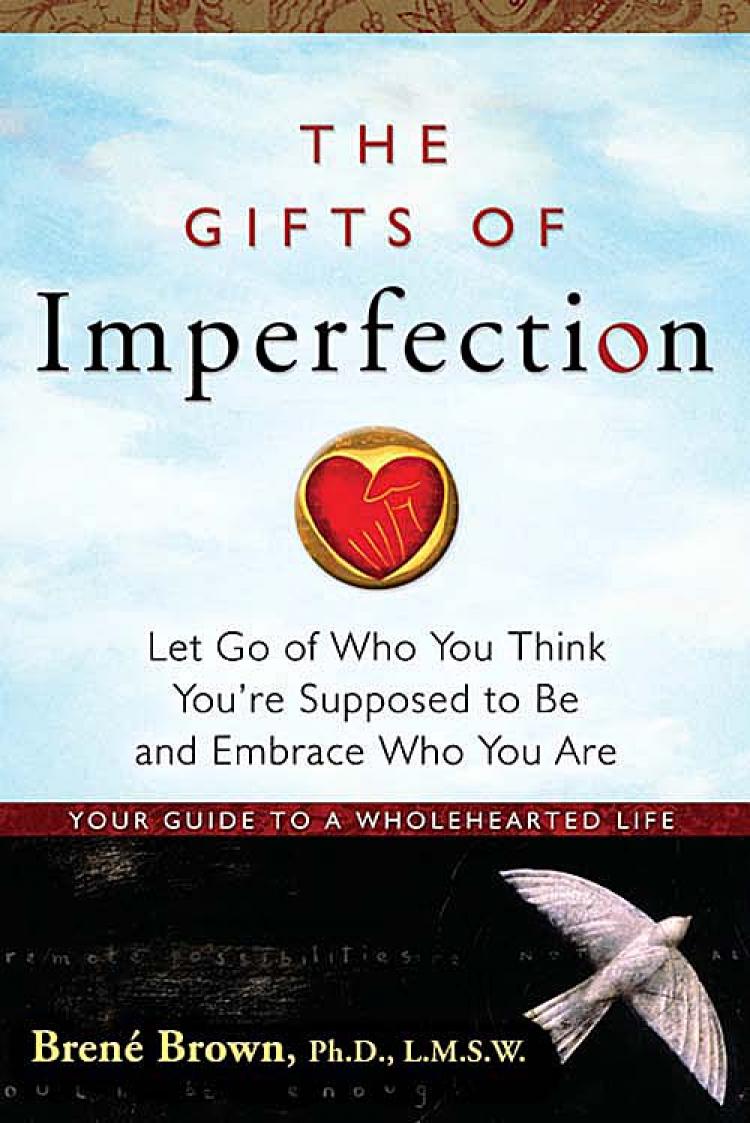
The Gifts of Imperfection by Brene Brown: By far the most transformative nonfiction/personal growth book of the year, especially for this Type A/Oldest Child combination.  She helped me find some grounding and do a lot of the thinking work that propelled me from May onward through the year.

1,000 Mornings by Mary Oliver: This short book of (accessible!) poetry grounded me as the seasons changed and helped put some of the wisdom I took from Brene Brown to work.

(Looking for more recommendations for your reading year? Click here to read my year in review posts since 2007.)

As always, I'd love to hear your best recommendations & reading plans for the new year!

Sunday, December 29, 2013

The magic of paying attention: Mary Oliver's "A Thousand Mornings"

{photoshop image, The Octopus Garden}


wrote about my favorite album of the year, Over the Rhine's Meet Me at the Edge of the World, back in September, which became an anchor for my soul this fall: an album I returned to countless times to be reminded of beauty and truth and the way I wanted to live. I also shared a link to an article I loved about their writing process.  In it, I found we shared a few common inspirations, which led me to check out some of the writers they mentioned, including Mary Oliver.  

Oliver's work is rooted in observing nature and cultivating a sense of place and in a quest to feel more grounded and aware, I took to reading her poetry collection A Thousand Mornings one poem at a time each day with my breakfast throughout October and November.  What I found while reading her work was that I began to look at the world around me in a different way.  Even though I live in a city, my eyes were sharpened and my breath deepened as I watched the rhythms of autumn and early winter around me.  I found myself staring at the patterns of leaf veins, and letting falling snow calm me down. 

I came across the image I included above while researching Oliver, and it has become a guide for me in pursuing a watchful spirit and a creative life.  Looking for reasons to be amazed, and living a life filled with wonder--especially when they don't cost a dime--is a game changer. 

Sunday, December 15, 2013

Everything was safe and good: transitioning from childhood adulthood

I recently finished The Round House by Louise Erdich, which is the story of 13-year-old Joe who lives on a reservation in North Dakota in the late eighties whose mother is brutally attacked and changes everything he held to be true.  On a large scale, this book brought to light the inane politics and laws surrounding crimes  against Native Americans by non Native Americans, both on and off the reservation land.  And on a smaller, it shows how people move from being the protected and defended as children to wanting to be a protector and defender.

If you've been reading here lately, I've been thinking a lot about living with a sense of rootedness--so when life gets busy or difficult, I am able to remember deep truths about life--and this lens is informing my entire reading life and what stands out to me in a text, and this book is no different. There is a moment mid-story when Joe hears his parents come home and instead of his father sleeping in the guest room, as he had been doing on request since the attack, they both went into their shared room: "I heard them shut their door with that final small click that meant everything was safe and good (210)."

There are things as children that enable us to feel secure and be able to rest.  (I've written about it before here and here.)  Part of growing up is becoming aware that life is fragile and often uncontrollable.  I often miss the sweetness of being young and thinking that everything "was ok" once both my parents made it home from work and we were all safe in the house.  And yet, I'm convinced that there is still truth behind feeling safe: resting in the fact that I am not in control, seeing patterns in the natural world, and knowing there is something bigger beyond that holds us together as humans.  It's a sense of safety that allows me to breathe deeply and not live in fear.

My school had our "Quality Review" last week and in the months, weeks, and days leading up to it, life at work was tense and stressful--a constant balancing act of hearing about the politics of education and things I needed to check off my list to play the game and remembering to look at my students and see them as people and remembering why I love my job in the first place.  On the second morning of the review, it started to snow pretty heavily.  My stomach was still in the knots it curled into since September, so I decided to take a minute in each class and turn off the lights and direct my students' eyes outside.  We sat in silence and watched the snow fall for a few moments and took deep breaths.  It was amazing.  And healing.

I am trying to cull my inner Mary Oliver (more on her poetry soon) and allow the both the tradition of family and rhythms of nature (yes, even here in the city) to remind me that there are seasons, there is beauty, and within each there is safety: here is the snow that comes every year.  It is cold, but it is beautiful.  Thinking I am "safe" it does not come quite as easily as it did when I was a child, but it is there, still.  

In the story, in a moment when he needs it most he wears his father's shirt to gather strength.  As an adult he wears his father's ties.  He is able to draw strength from tradition and memory and pattern and move forward, even when safety can't be defined as the click of a doorknob.  And this is what I am thinking on as I get ready to go home for Christmas: the strength I can draw on from the rhythms my family has created and the beauty and truth that lay hidden beneath.  

Saturday, December 7, 2013

The Gift of Solitude: applicable to all adults, as described in a young adult novel.

If there is one thing I try to share with my students throughout the year, it's the idea that each one of them has a story: that you can never know someone's story just by looking at them, that it is one of life's greatest gifts to get to hear other people's stories, and that it is a privilege for me to get to know theirs throughout the course of the year.  My hope is that they will take the time to really know one another and build a community of understanding, respect, and kindness.  

And then I had a moment where I met a protagonist I wanted every student to know:

If there's one thing I've learned, it's this: We all want everything to be okay (page 6).

The only way I can navigate through my life is because of the 98 percent that every life has in common (page 77).

In my experience, desire is desire, love is love.  I have never fallen in love with a gender. I have fallen for individuals.  I know this is hard for people to do, but I don't understand why it's so hard, when it's so obvious (page 142).

A handful of my students were raving about Everyday by David Levithan in our weekly "Friday Favorites" five minute share and after hearing the premise, I knew I wanted to check it out.  The protagonist, A, is essentially a soul (without a gender): s/he wakes up in a new body everyday while maintaining a fully developed sense of self--just no physical body with which to express him/herself.  This is one of the most thought provoking and creative young adult books I've ever read.  It touches on so many young adult emotional-development issues, but not in a preachy way: the protagonist authentically brings them up and because his/her life experience is so different than the average human, and based on what I've witnessed in my classroom, I think young adult readers will just soak it in.  

But I also found a section that spoke into everything I've been thinking about lately: maintaining a sense of self, of peace, of purpose.  He falls for the girlfriend of a [horrid] guy whose body he occupies for a day and then ends up maintaining a relationship with her--his/her first ever--though each day s/he is in a new body. S/he sees the stress she deals with and the broken, hurtful relationship she is in.  When s/he unexpectedly wakes up in her body one day, he decides to try to give her the gift of peace in solitude and goes for a long hike.  The description he uses is amazing: 

I've decided to give Rhiannon the satisfaction of being fully alone.  Not the lethargy of lying on the couch or the dull monotony of drifting off in math class.  Not the midnight wandering in a sleeping house or the pain of being left in a room after the door has been slameed shut.  This alone is not a variation of any of those.  This alone is its own being.  Feeling the body, but not using it to sidetrack the mind.  Moving with purpose, but not in a rush. Conversing not with the person next to you, but with all of the elements.  Sweating and aching and climbing and making sure not to fall, not to get too lost, but lost enough...When no one else is around, we open ourselves to the quieter astonishments that enormity can offer (197-198).

I meet monthly with some friends and we talk about the creative pursuits in our lives and what we are learning about ourselves in the process.  It has become a treasured time for me.  My November wasn't as creative as I planned: I made some substitutions for painting and calligraphy in the name of stress and exhaustion and travel, which at the time seemed justifiable.  I realized, though, that my substitutions weren't the same, even though I was technically "doing nothing." I realized once again that I need to spend intentional time opening myself "to the quieter astonishments that enormity can offer"--whether that enormity is staring at sky behind the branches of newly leafless trees, breathing in the scent of my Christmas tree, or taking out my paints and ink to let go and create.

Here's to a beautiful winter season filled with beauty amidst the darkness.

(And here are some other winter thoughts in case you, too, struggle with the fact the sun goes down at 4:30, or just need some context and/or hope from someone who is often winter-hopeless).

Sunday, November 17, 2013

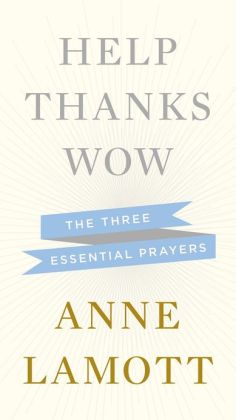
Help. Thanks. Wow.

In following with the month of November and trying to lead a life where its richness and depth trumps my to-do lists, and in the same vein as pursuing a life that described in this post about Brene Brown's The Gift of Imperfection, I've been trying to keep a journal for a few minutes each morning for what I am thankful for: the small things like miniature pumpkins and the big ones like my family alike.  

This morning I am thankful for Anne Lamott and also her short book on prayer: Help, Thanks, Wow.  I first read Anne Lamott ten years ago when we had to read her book about writing Bird by Bird for a class.  Randomly afterward I realized I had a handful of friends who were really into her book Travelling Mercies, which is about her faith and was such a refreshing read.  I'm thankful for a writer who can mentor me through a season of wanting to let go of my anxiety and frantic pace.

There are three sections, each dedicated to a word in the title, and she walks the reader through admitting we don't know what to do, the art of gratitude, and the way that wonder can change us and the way we see the world.  I could subtitle this book "breathing deep through all the things," because she describes how these prayer rhythms anchor her as a person able to face life with courage.  It reminded me what a gift centeredness can be.

So I just want to share two excerpts and throw them out into the universe in the hope that someone will connect with them as well, and feel just a little bit more full today:

Without revelation and reframing, life can seem like an endless desert of danger with scratchy sand in your shoes, and yet if we remember or are reminded to pay attention, we find so many sources of hidden water (page 53).  

We're individuals in time and space who are gravely lost, and then miraculously, in art, found...In paintings, music, poetry, architecture, we feel the elusive energy that moves through us and the air and teh ground all the time, that usually disperses and turns chaotic in our busy-ness and distractedness and moodiness.  Artists channel it, corral it, make it visible to the rest of us.  The best works of art are semaphores of our experience, signaling what we didn't know was true but do now (page 82).

Monday, November 11, 2013

Teen decisions: passion, idiocy, or both? Or, Character Analysis and the Prefrontal Cortex.


One of the things I'm most interested in thinking about right now is the human brain during teenage years and the early twenties.  I just completed a project for graduate school about social emotional learning and development and was amazed by all adults can do to enrich and equip the emotional health of teenagers.  Working with young people who are crossing over the bridge in development where their ability to comprehend language and speech is mostly complete into frontal lobe development is a fascinating, though sometimes exhausting, place to spend my working hours. According to Psychology Today "Fifteen-year-olds have not yet fully developed the ability to understand the consequences of their actions and act accordingly. They have difficulty with planning and organization, and learning from their mistakes. They often act impulsively or inappropriately, they have roller-coaster emotions, and working towards distant goals rather than being unduly influenced by immediate rewards is a stretch for them...The brain evolved in this way for a good reason. Teenagers need to take risks in order to make the leap from home and reliance on parents to independence."  


Not only is this directly tied to my profession, but it has become a fascinating topic of conversation with my friends and peers in recent years as we think back and study patterns, passions, and behaviors of our own teenage years and early twenties.  For most of us, it was a time of great desire to connect with something, though the means to attain the nondescript something may have varied under the large umbrella of simply wanting to feel alive: music, faith, the outdoors, literature, sports, theater, justice.  We took risks of all kinds in order These roots remain in each of us still, and yet the highs and the depths we felt seem like distant acquaintances, or as though they have gone through a strainer of life experience, wisdom, and perspective.  My thoughts are ongoing.  

Overlapping these trains of thought was my reading of The Secret History by Donna Tartt over the past few weeks.  It was published in 1992 and unbeknownst to me, a cult classic, especially among people who were teenagers or college students when it came out.  It is the story of a tightly knit group of friends at a small, private college in Hampshire.  They are privileged, passionate classics majors who shun the traditional college scene for lives steeped in nostalgia for ages past and a devotion to their father figure professor Julian.  The narrator Richard, speaking many years removed, reveals how he providentially obtained a scholarship, left home, shamelessly lied about his past and became a part of this group of friends. He opens the story confessing to the group murder of one of its own that occurred not long after he learns of the dark place their thirst for something more took them.

After doing some research I learned Tartt called it not a whodunit, but a "whydunit": the reader knows immediately where the book is headed (with a twist or two) and along the way is able to watch the motivation, justification, and aftermath.  This book was one of those long ones that is fun to sink into--the kind where I can't just pick up another book after completing it because I'm not ready to completely leave it behind.

What I've been left with as I consider  the book is a bit of character analysis through the lens of the prefrontal cortex, though I will only provide the questions as I don't want to give the story away.  I love the line with which Julian opened their classes: "I hope we're all ready to leave the phenomenal world, and enter into the sublime?" It brought me back to my own teenage years which were ripe with the longing for something bigger, for meaning, for something to get lost in.  But, what did this invitation into the sublime do for these characters in particular? What does the sublime offer us as adolescents? As adults? What do we lose and gain as we develop? 


Saturday, November 2, 2013

Brene Brown, game changer.

I first heard of Brene Brown last winter when my friend Lindsay told me I had to watch her TED talk called "The Power of Vulnerability." It was a game changer for my emotional health, y'all.  Then Lindsay and I decided we would both read her book The Gifts of Imperfection and it was the perfect follow up for helping me process through what it means to live with meaning and purpose and without anxiety.  Reading the book and reflecting on Brown's research and how it related to my life has been an incredibly powerful experience.  I've slowly and reflectively read this book over the past five months or so. This post is a little vulnerable, but I think Brene Brown would be in favor of me sharing and owning these pieces of my story.

My core spiritual beliefs (grace, love, forgiveness, stillness) have remained much the same over the years, but there came a time when I had to face the fact that from every angle I was hearing: strong people of faith ________.  As a high achieving people pleaser, for many years I ran without stopping in my volunteer work, my actual work, and in the commitments I made in my free time.  Sometimes despite hearing an overarching message of grace and love, I felt as though I was constantly not measuring up to what I was "supposed" to be doing, which was difficult for a perfectionist (though now I consider myself a recovering one) and felt as though I had to be apologetic for my introverted nature.  I've taken the past few years to redefine what a spiritual life looks like for me and to (finally) learn to be ok with the fact that it does need to look like anyone else's.

A lot of authors have mentored me through this journey: Mother Theresa with Come Be My Light, Anne Lamott with Traveling Mercies and Bird by Bird, Joan Didion with The Year of Magical Thinking, Susan Cain with Quiet, Colum McCann with Let the Great World Spin, Eric Metaxes with Bonhoeffer, and of course the poetry and music of Over the Rhine.  What I appreciate about Brene Brown is that her book seemed to pull together all of these literary influences and helped me to redefine and find freedom in what spirituality looks like for me.


In the journey of trying to define what my spiritual life looks like now, it honestly can be easy to simply not think about it, thus avoiding existential dilemmas.  But, the anxiety that so easily creeps in reminded me that being grounded and intentional is life giving and I noticed that not having an intentional grounding in faith, I became less hopeful in general, a bit cranky, and I forgot to look for beauty.  Brown's definition of spirituality piqued my interest because I was (still am) so tired of the minutia of Christian theology:  "By spirituality, I'm not talking about religion or theology, but I am talking about a shared and deeply held belief.  Here's how I define spirituality: Spirituality is recognizing and celebrating that we are all inextricably connected to each other by a power greater than all of us, and that our connection to that power and to one another is grounded in compassion.  Practicing spirituality brings a sense of perspective, meaning, and purpose to our lives" (64).  


When she wrote "It's not about denominations or dogma. Practicing spirituality is what brings healing and creates resilience. For me, spirituality is about connecting with God, and I do that most often through nature, community, and music.  We all have to define spirituality in a way that inspires us,"(74)  I was reminded of the life nature gives me and how washing dishes or walking with music centers me, and how dinner with my husband and great friends grounds and connects me.

One of the messages I have struggled with as a Christian is that "everything happens for a reason," which I simply cannot buy into no matter how many scripture based conversations I have.  This felt really isolating, especially in the early days of this journey.  I have landed in a place of confidence and rest with this issue and others, and reading Brown's book helped give greater clarity to me: "At first I thought faith meant 'there's a reason for everything.'  I personally struggled with that because I'm not comfortable with using God or faith or spirituality to explain tragedy...Here's how I define faith based on research interviews: Faith is a place of mystery, where we find the courage to believe in what we cannot see and the strength to let go of our fear of certainty" (90).  Faith as a beautiful mystery has been one of the most healing perspectives I've run across.  

To close, one of my favorite parts of the book was when Brown discussed the fact that we can change our neurological pathways, something one of my old pastors used to talk about, too.  It is possible to physiologically change our patterns of thinking (google neuroplasticity).  I'm now living in a way where I am trying to incorporate rhythms into my life that help me feel grounded, connected, grateful, and covered in grace.  This is happening for me through reading, taking time to be creative (watercolor and calligraphy lately), cooking, looking for beauty, and  practicing stillness.  It looks different, but feels beautiful.