I'm fractured
In the fall
and I want to go home
from Two by Ryan Adams
Saturday, January 21, 2012


The kind of literary spirit I love.
"Such a small, pure object a poem could be, made of nothing but air, a tiny string of letters, maybe small enough to fit in the palm of your hand. But it could blow someone's head off," (59).
from Lit by Mary Karr
from Lit by Mary Karr
Sunday, January 8, 2012
This year's winter.
First, I have been in discussion with one of my best friends who also happens to be a teacher about how we always think of the "new year" starting in September. We realized that the main way we identify ourselves is through our job, which in many ways is great: teaching English combines so many of my passions. It is generally hard for me to do a year reflection, because since I've never left the school calendar since infancy, January to me is the end of the first semester...the half way point. It feels strange to think about 2011 because I had two different groups of students. I had two different curriculum plans. But. This is only if I look at my life solely through my profession.
Second, I caught myself spreading my winter blues this morning. I've written before about my how my college roommate and I diagnosed me with Seasonal Affective Disorder online in 2001 and about how spring-forward is my favorite day of the year. I've probably even written about how I blame the school calendars of my youth who had flowers decorating the month of March (obviously made by a southerner) for the way my heart starts to get prematurely hopeful for warmer weather. However, my personal-not-job-related goal for 2012 (the first fourth of it, anyway) is to have a better attitude about the winter. There. I said it. Please, if you see me, remind me of this.
Another dear friend sent me an essay from a book called Let Your Life Speak many winters ago about living through the seasons as a polite way of telling me to get a better attitude. I return to it every year. It tells me: "Winter is a demanding season...and yet the rigors are accompanied by gifts: ...times of dormancy and deep rest are essential to all living things...One gift of utter clarity as in winter, one can walk into woods that had been opaque and see the trees clearly...Winter clears the landscape, however brutally, giving us a chance to see ourselves and each other more clearly, to see the very ground of our being." Another friend of mine moved to San Diego from New York and told me that perfection can breed complacency.
So, I would like to live thankfully and intentionally this winter. I realized the other day that I never posted about Patti Smith's memoir Just Kids (which would have definitely made it onto the Top Ten). I reread my notes inside and what I found has a direct correlation with how I want to live in this cold season:
"...it was the work in a hall devoted to Picasso...that pierced me the most. His brutal confidence took my breath away." (11) "I craved honesty, yet found dishonesty in myself...Picasso didn't crawl in a shell when his beloved Basque country was bombed. He reacted by creating a masterpiece in Guernica to remind us of the injustices committed against his people. When I had extra money I'd go to the Museum of Modern Art and sit before Guernica, spending long hours considering the fallen horse and the eye of the bulb shining over the sad spoils of war. Then I'd get back to work." (65)
"But secretly I knew I had been transformed, moved by the revelation that human beings could create art, that to be an artist was to see what others could not." (11)
"He [Robert Maplethorpe] contained, even at an early age, a stirring and the desire to stir," (13)
I want to stare winter down. If it makes me angry, I want to do let that anger inspire writing. Or to fight against it with dinner parties. Or crawling out of my hole and stepping outside for a run with my friends and then feel as though I have thoroughly kicked it in the rear. I want it to inspire me to actually live rather than hunkering down with Netflix instant streaming. I want to sense a stirring and stir.
Saturday, January 7, 2012
Unbroken.

I wrote my last post about my struggle in thinking about the lost in war, and this one I realized is one about the survivors. It still leaves me thinking: at what cost will humans ever stop? I cannot imagine surviving through what these men faced as prisoners. It was impossible for me to read this story without feeling sick to my stomach about the complaints that arise about my own life circumstances. What stood out to me the most in reading this book is the incredible fortitude of the human spirit. It saddens me that this phrase might sound cliched, because if I look at the hardships people have faced faced throughout history and the fact that they have survived--be it a global war or a personal one--is truly miraculous. And in the case of surviving the war, making it home was only half of the battle:
"The Pacific POWs who went home in 1945 were a torn-down men. They had an intimate understanding of man's vast capacity to experience suffering, as well as his equally vast capacity, and hungry willingness, to inflict it. They carried unspeakable memories of torture and humiliation, and an acute sense of vulnerability that attended the knowledge of how readily they could be disarmed and dehumanized. Many felt lonely and isolated, having endured abuses that ordinary people couldn't understand...Coming home was an experience of profound, perilous aloneness. For these men, the central struggle of postwar life was to restore their dignity and find a way to see the world as something other than menacing blackness. There was no one right way to peace; every man had to find his own path, according to his own history. Some succeeded. For others, the war would never really end," (349).
In my city there are times that it feels like a superficial quest for outward beauty: to maintain the posture that every aspect of one's life is meticulously curated. But, as most New Yorkers know, there is beauty in the broken and in the faces that no fashion magazine would ever run. There is beauty to be found in the mess and in the trying.
In my last post, I wrote about how wars are often fought for freedom of some sort, and that for the opposing forces there seems nothing left to do but to obliterate the other side. It seems to me as though this can stand for a metaphor for living--for those who can't escape the messiness of being human, anyway. It feels as though my reading life is bleeding one book into the next, because I am about to finish Lit by Mary Karr, which is the story of her battle with alcoholism--finding freedom and everyday fighting against the blackness. I can't help but think about how she needed to find her way to peace. I just saw Extremely Loud and Incredibly Close (one of my favorite books) and was broken watching Oskar, the 11 year old main character who lost his father on 9/11, struggle and fight through his pain, in a way different from everyone else around him.
My students often complain about why they have to learn something that they think they will never have to use. I have set answers for every subject area, but my one for social studies is always that I think that the best president, and any kind of leader for that matter, will always be the one who not only looks anxiously into the future, but one who is able to look back into the past--understanding both the macro and micro horrors and hardships. For it is understanding--and experiencing--struggle that enables us to live and lead in a just, compassionate way. Louie Zamperini's story was a reminder to me of many things, but the most heavy one to me was to know the stories that make up our collective past: to learn what others have been through and to let that lead me into a life of greater compassion and understanding--as well as hope for the moments when I find myself fighting a battle that seems greater than myself. The incredible part about it, to me, was that this was not a work of fiction--but rather, a demonstration of the patterns that great works of fiction try to portray.
Tuesday, January 3, 2012
War and letters and stories.
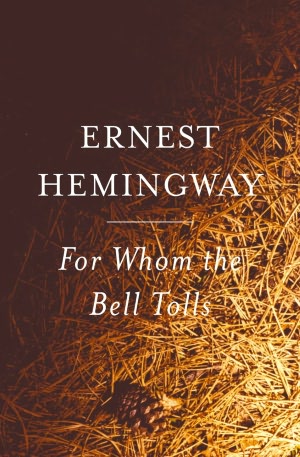
I had a rough start with For Whom the Bell Tolls by Ernest Hemingway. As his is typical style, it was written in a matter of fact, moment by moment description, in this case mostly from the voice of Robert Jordan, an American fighting with the revolutionary guerillas in the Spanish Civil War. But, Hemingway accomplished his goal and while reading it I felt like I was there with him, moment by moment, which is probably also the reason why I never made it past 3-5 pages when reading it before bed and why it took multiple in-flight reading swathes of time and my break from school to finish.
About two thirds of the way through, Jordan spends time reading the letters found in the pockets of a dead opposing cavalryman, which spurs on one of the longest inner conversations that the reader hears in the story. The entire account is fascinating, and is Jordan thinking about who and why he has killed. Here are a few excerpts:
"You never kill anyone you want to kill in a war, he said to himself," (302)...
"How many of those you have killed have been real fascists? Very few. But they are all the enemy to whose force we are opposing force," (304).
"Listen, he told himself. You better cut this out. This is very bad for you and your work," (304).
I would argue, and actually don't think it's that controversial of a theory, that the reading of his dead enemy's letters were what brought on his mental struggle with the death that accompanies war. What I find interesting about this, though, is that it comes back to the core of my own beliefs: once you know someone's personal story, even the bits of daily minutia detailed in letters Jordan read, it is near impossible to view them in the same way.
I struggle with war because whenever I read about it. I am constantly thinking about the lives of the lost--on either side--and generally it is the daily minutia that destroys me. The first time I visited the Holocaust Museum in Washington, D.C., it was the displays of the personal effects those sent to concentration camps gave up: the piles of brushes and razors, the pile of shoes.
This is what creates empathy in literature and I why I plead with people to read...and write. To me, reading is the great metaphor for understanding humanity and a reminder for me to remember that everyone in front of me has a story--whether it's a student who is driving me crazy, the driver who is honking at me to walk faster through a crosswalk, a stranger I pass on a run.
The interesting part of this excerpt from the book, though, is that Jordan says that thinking in this vein is very bad for his work--which is true. To fight for his cause in this context, personalizing the enemy would lead to failure. He talks himself through the fact that he must do what he is doing to create a better world for the future: and yet, there are people fighting on the other side who believe the same thing, whether it is war on a national level or between two people. And sometimes, looking back, there is a clear, right side. Sometimes there isn't.
I wonder a lot about the fact that throughout history, it has come down to fighting to achieve freedom. I wonder a lot about what this says about us as people. I wonder about what would create a world (or nation or state or city or home) without violence. I don't think it's possible to live without conflict, but I wonder what it would take to teach us to handle it differently. Over the next week or so, I'm going to be writing about it as many of my recent reads have been about war, both fiction and non fiction, adult and young adult. I have no answers and it only gets more complicated, but reading and writing is the only way for me to work through it all.
Sunday, January 1, 2012
so 2012 began in the best city in the world with a best friend, laughter and books. This is a good sign, I think.
 |
| front cover. |
You might be wondering now why I'm writing about this on my blog about books. Because when I rode the subway up to my friend's apartment I was reading Lit by Mary Karr, which I'm pretty excited about, but let's be honest. It was New Year's Eve, and even though I was wearing a shiny shirt underneath my coat, I probably looked like a killjoy, incapable of smiling as I read a memoir about alcoholism (even though I had read 40 pages and felt accomplished, like my old reading self again, since it took me 5 weeks to read my last book).
So, one of the shining moments of my New Year's Eve was when I walked into my friend's apartment and we exchanged books--I brought her my copy of Tina Fey's Bossypants and she handed me her copy of Mindy Kaling's Is Everyone Hanging Out Without Me? (And Other Concerns) and we stood there silently reading the introductions, totally engrossed, and became conscious of how lame we probably looked. Then we realized we didn't care and sat there and read all night. Just kidding. We didn't do that. We sat there and laughed all night. And for this year, I can't imagine a better way to spend New Year's Eve.
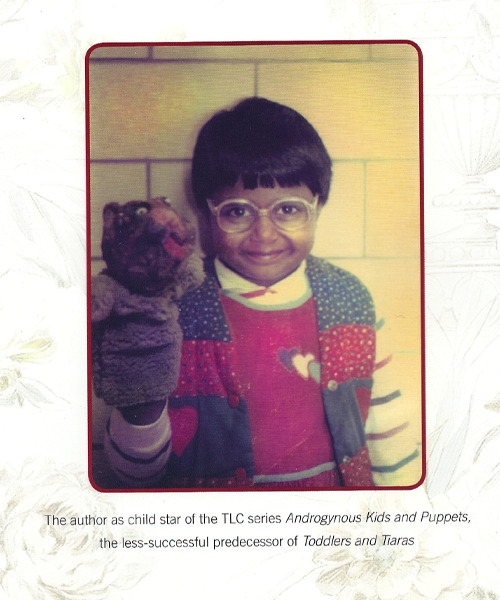 |
| back cover. can't stop laughing. |
So, back to New York being poetic and riding the subway alone on the biggest party night in town. I started Kaling's book and could not stop laughing all the way home. It could have been a sad little moment, given that I was wearing jeans and flats while surrounded by glamorous, high heeled party-goers, but I was just too thankful for what I did have and for the laugh out loud humor and perspective of the book. In a town where sometimes I feel like I'm a little too midwestern, it was so refreshing to read Kaling's not-typically-Hollywood perspective.
Then I stayed up until 3 reading. Then I woke up and finished it this morning. So all that to say, I had a great New Year's and you should immediately go out and buy this book. No, seriously.
Monday, December 26, 2011
Reading Year in Review and Top Ten Books of 2011.
My blog is about to celebrate its 5th anniversary next month. I wrote my first post on January 6th, 2007, partly to slow down and think about what I was reading again and partly in an effort to get more comfortable with sharing my writing in a "public" space (I would like to thank my 4 loyal readers at this time: Mom, Dad, Alison Covey, Kendra Bloom). Every year when I'm home for Christmas I read every post I wrote over the year and choose the top ten best books I've read.
Usually, it takes me many hours to reread my blog posts for the year. As I read, I take notes and end up with a list at least 20 contenders for the coveted top ten. I have to do some serious thinking and rereading of posts to decide which books had the biggest impact on my thought life--and then spend some serious time laughing about the nerdy ways I spend my time. This year was not so difficult. Sadly, I don't think I can attribute that to any increased coolness to my life, but I do think I have a few answers/self justifications for the reasons why this year I had only 23 posts (2008 holds the all-time high of 97):
The Hours by Michael Cunningham/Mrs. Dalloway by Virginia Woolf (rereads)
These books have to be paired together and were two of the most thought provoking reads of the year.
Freedom by Jonathan Franzen
This book received an insane amount of press when it was published last year. Overall, especially because my book club read read The Corrections first, I throughly enjoyed getting inside the mind of Franzen.
Super Sad True Love Story by Gary Shteygart
Not especially well written, but it definitely was the instigator of many great conversations and some science-fiction/technology induced nightmares.
Beloved by Toni Morrison
I think this was the most historically significant, jarring book that I read this year, and combined with its lyrical prose, it left me speechless.
The Diving Bell and the Butterfly by Jean-Dominique Bauby
Short. Beautiful. Inspiring.
Bossypants by Tina Fey
The most enjoyable book of the year.
Infinite Jest by David Foster Wallace
Harder than my book club's run with the Russians a few years ago and encompassing almost all of my summer, this book was well worth it.
A Million Miles in a Thousand Years by Donald Miller (reread)
This book was a non-fiction, good reminder of all things I love about story and life.
The Summer Book by Tove Janssen(reread)
This book has become one of my yearly rereads and I've written about it a few times. I spend the quiet, early summer mornings I have at my parents' house on their screened in porch reading just a chapter or two a day so that I can savor and soak in it during my entire visit. This year it was my respite from Infinite Jest, to make sure that reading was not only speaking into the my academically-minded side of my brain, but also my soul.
The Hunger Games by Suzanne Collins
I read the first book of this series as soon as it came out, on recommendation of our Teachers College professional developer. I never finished the series because I felt like I knew enough to talk about it with kids and had so many other books to read. However, after the Epic-Literary-Reread book club on Harry Potter with my students last year, I thought that it would be cool to do the same thing with The Hunger Games this year. I read these books in about a week and was amazed to see all of the entry points for young readers to have uber literary conversations. I have also been amazed at how many of my adult friends have been reading the series and are eager to discuss. A post-movie discussion party is in the works.
Cheers to reading and a 2012 filled with more writing about it!
Usually, it takes me many hours to reread my blog posts for the year. As I read, I take notes and end up with a list at least 20 contenders for the coveted top ten. I have to do some serious thinking and rereading of posts to decide which books had the biggest impact on my thought life--and then spend some serious time laughing about the nerdy ways I spend my time. This year was not so difficult. Sadly, I don't think I can attribute that to any increased coolness to my life, but I do think I have a few answers/self justifications for the reasons why this year I had only 23 posts (2008 holds the all-time high of 97):
- The spring was filled with YA books that enriched my teaching life and a side project I'm working on, but weren't necessarily significant enough for me to subject my loyal readers (see above) to.
- The summer, normally the two months that I read the highest number of books, was filled with Infinite Jest, a book that I felt I needed to finish before I posted anything about it. (Then, the fall happened and I still have 5 additional posts about Infinite Jest sitting in my drafts.)
- This fall, I got caught up reading books for and with my students. Many of my Saturday mornings, normally my drink-a-hot-beverage-and-write-about-my-reading time, were filled with training for my half marathon. Also, my book club choice was For Whom the Bell Tolls by Hemingway, which is not a read-before-you-fall-asleep kind of book: I would make it literally 3 pages and fall asleep. I'm finally about to finish it, which I owe to traveling 3 out of the last 5 weekends on U.S. Airways, who does not offer in-flight television.
The Hours by Michael Cunningham/Mrs. Dalloway by Virginia Woolf (rereads)
These books have to be paired together and were two of the most thought provoking reads of the year.
Freedom by Jonathan Franzen
This book received an insane amount of press when it was published last year. Overall, especially because my book club read read The Corrections first, I throughly enjoyed getting inside the mind of Franzen.
Super Sad True Love Story by Gary Shteygart
Not especially well written, but it definitely was the instigator of many great conversations and some science-fiction/technology induced nightmares.
Beloved by Toni Morrison
I think this was the most historically significant, jarring book that I read this year, and combined with its lyrical prose, it left me speechless.
The Diving Bell and the Butterfly by Jean-Dominique Bauby
Short. Beautiful. Inspiring.
Bossypants by Tina Fey
The most enjoyable book of the year.
Infinite Jest by David Foster Wallace
Harder than my book club's run with the Russians a few years ago and encompassing almost all of my summer, this book was well worth it.
A Million Miles in a Thousand Years by Donald Miller (reread)
This book was a non-fiction, good reminder of all things I love about story and life.
The Summer Book by Tove Janssen(reread)
This book has become one of my yearly rereads and I've written about it a few times. I spend the quiet, early summer mornings I have at my parents' house on their screened in porch reading just a chapter or two a day so that I can savor and soak in it during my entire visit. This year it was my respite from Infinite Jest, to make sure that reading was not only speaking into the my academically-minded side of my brain, but also my soul.
The Hunger Games by Suzanne Collins
I read the first book of this series as soon as it came out, on recommendation of our Teachers College professional developer. I never finished the series because I felt like I knew enough to talk about it with kids and had so many other books to read. However, after the Epic-Literary-Reread book club on Harry Potter with my students last year, I thought that it would be cool to do the same thing with The Hunger Games this year. I read these books in about a week and was amazed to see all of the entry points for young readers to have uber literary conversations. I have also been amazed at how many of my adult friends have been reading the series and are eager to discuss. A post-movie discussion party is in the works.
Cheers to reading and a 2012 filled with more writing about it!
Subscribe to:
Posts (Atom)